
Home >> Our Blogs >> Website Speed and Its Impact on Sales: What the Data Shows
Introduction
A slow website doesn't just frustrate visitors, it directly costs you money. The connection between website speed and sales is one of the most well-documented, yet most ignored, factors in online business today.
Why Speed Matters More Than You Think
Attention spans online are short. When a page takes too long to load, most visitors simply leave before they even see your content, offer, or product. This is called bounce rate, and slow websites consistently show much higher bounce rates than fast ones.
What the Data Actually Shows
Industry studies consistently reveal similar patterns:
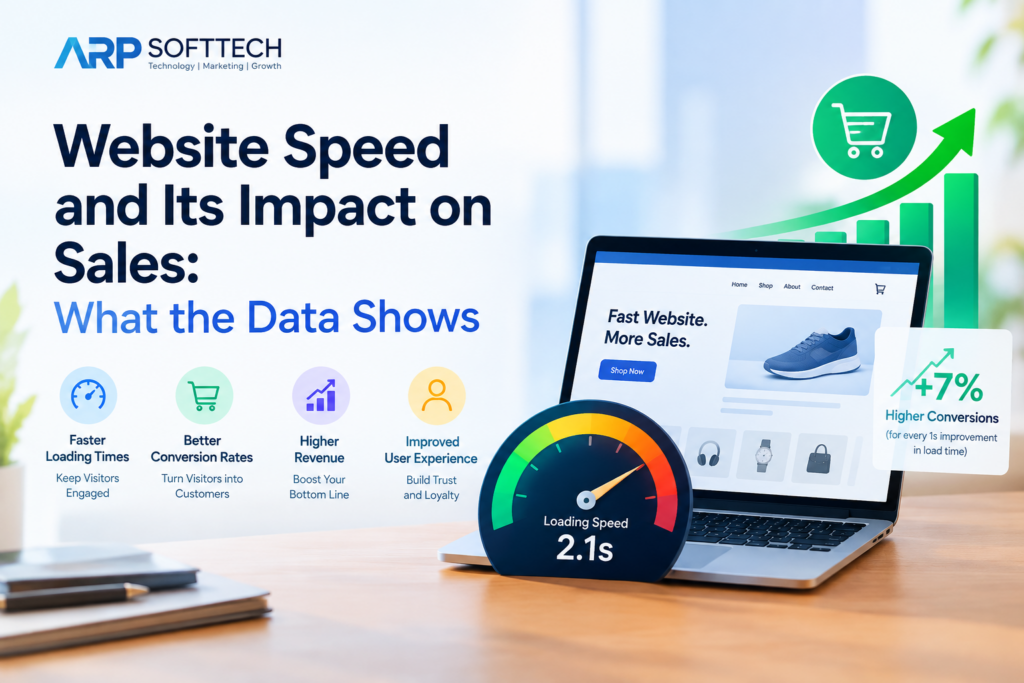
- Even a one-second delay in page load time can noticeably reduce conversions.
- A majority of mobile users abandon sites that take more than a few seconds to load.
- Faster websites see measurably higher average order values and higher customer satisfaction.
This is the real page load time conversion relationship: every extra second of loading time is a chance for a potential customer to leave.
How Google Factors Speed Into Rankings
Beyond user behavior, Google directly uses page speed as a ranking factor through Core Web Vitals, a set of metrics measuring loading speed, interactivity, and visual stability. A slow site doesn't just lose customers directly, it also loses visibility in search results, compounding the damage.
The link between website speed and sales isn't theoretical, it shows up directly in your analytics the moment your load times improve.
Common Causes of Slow Websites
- Unoptimized Images: Large image files are one of the biggest culprits behind slow loading times.
- Poor Hosting: Cheap or overloaded hosting servers struggle under real traffic.
- Excessive Plugins or Scripts: Too many add-ons can significantly slow down a website.
- No Caching: Without caching, your server rebuilds pages from scratch on every single visit.
- Unoptimized Code: Bloated or outdated code adds unnecessary loading time.
How to Improve Your Website Performance
- Compress and resize images before uploading them.
- Choose reliable, fast hosting suited to your traffic levels.
- Enable browser caching and use a content delivery network (CDN).
- Remove unnecessary plugins, scripts, and third-party trackers.
- Regularly test your site using tools like Google PageSpeed Insights.
Improving overall website performance is rarely a single fix. It usually requires a combination of these improvements working together.
Whatever industry you're in, the relationship between website speed and sales tends to follow the same pattern: faster pages keep more visitors around long enough to convert.
Real-World Business Impact
For an e-commerce store, even small speed improvements can translate directly into more completed purchases and lower cart abandonment. For service-based businesses, faster websites mean more completed contact forms and fewer visitors bouncing before they even see your offer.
How ARP SOFTTECH Builds Fast Websites
At ARP SOFTTECH, speed is a core part of every website we build. Through Optimized code, smart hosting choices, and image compression, we ensure your website loads fast on every device, protecting both your rankings and your revenue.
Not sure how fast your website actually is? Get a free website speed audit from ARP SOFTTECH and find out exactly what's costing you sales.